
8 Hours
Private Tour
English
Up to 18 Guests
Rhodes Full Day Private Tour
Got a Question?
Contact UsHighlights
Rhodes Full Day Private tour
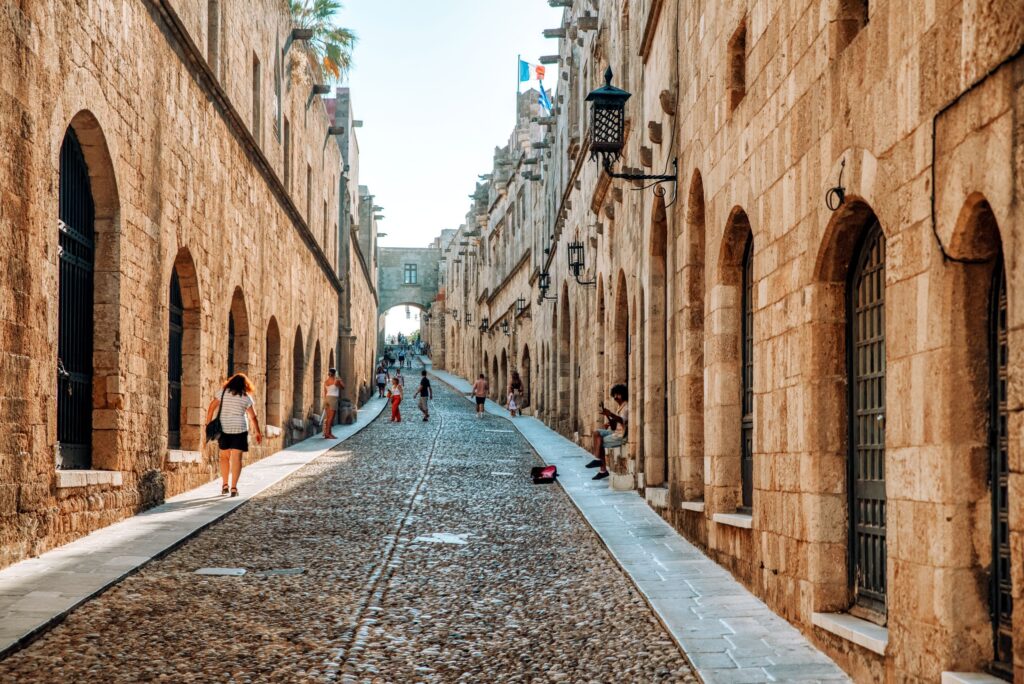
- Rhodes Old Town
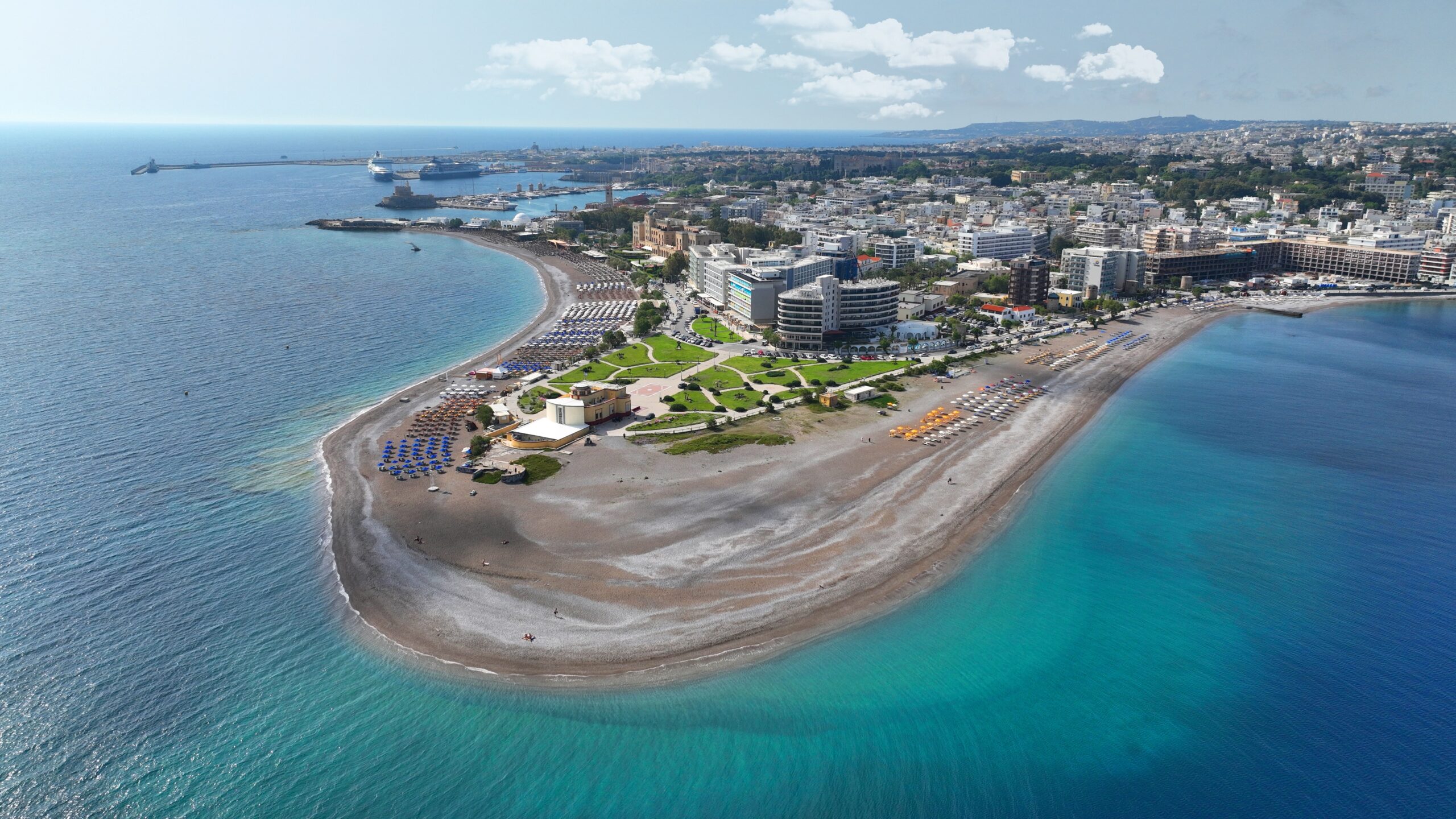
- Mandraki Harbour
- Church of the Annunciation
- Monte Smith Hill
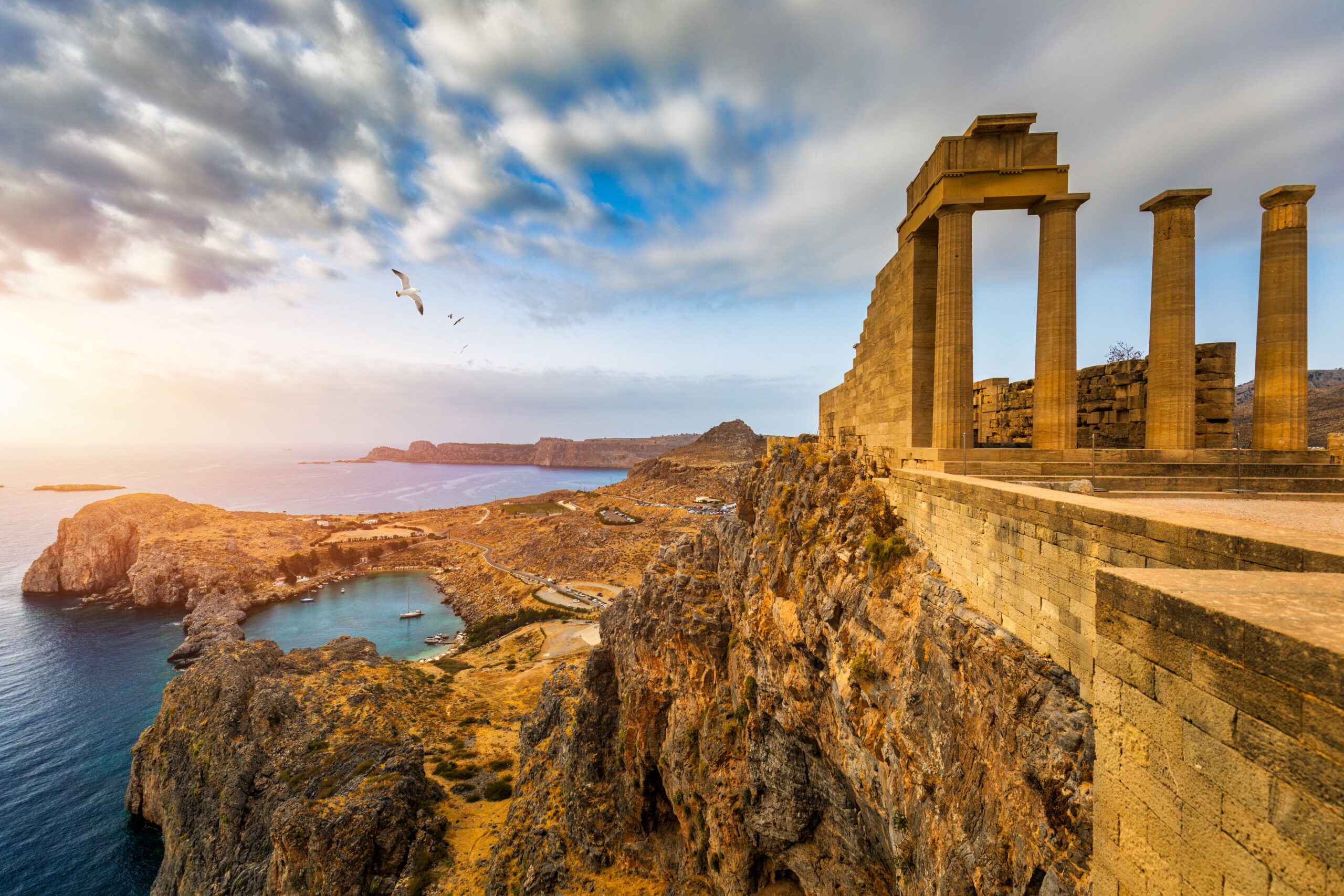
- Temple of Apollo
- Aquarium of Rhodes
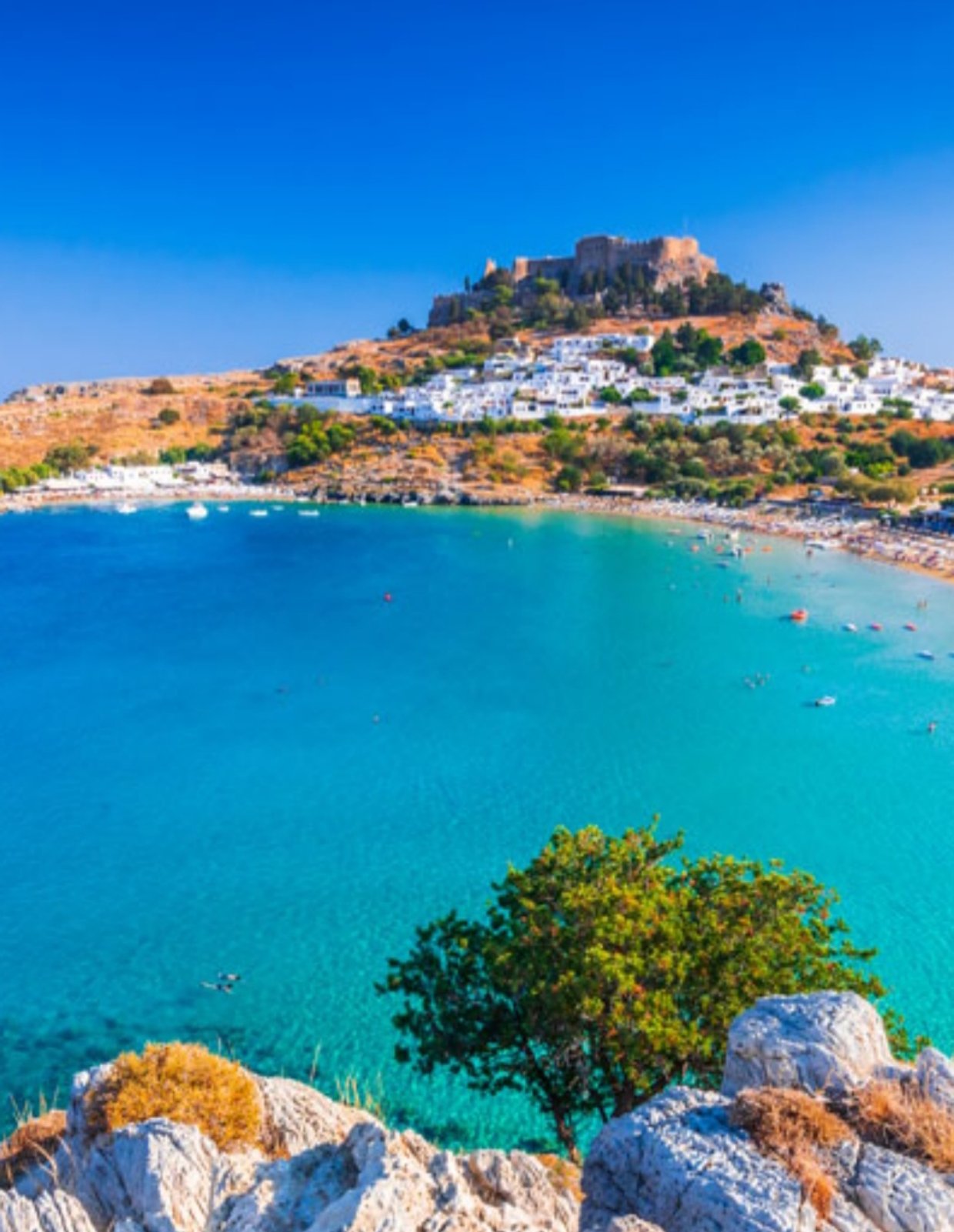
- Lindos Village
- St. Paul’s Bay
- Kallithea Springs
Itinerary
Your full-day experience begins with a convenient pickup from your hotel or cruise ship, as you set off to explore the most iconic sights of Rhodes in a single, carefully curated day.
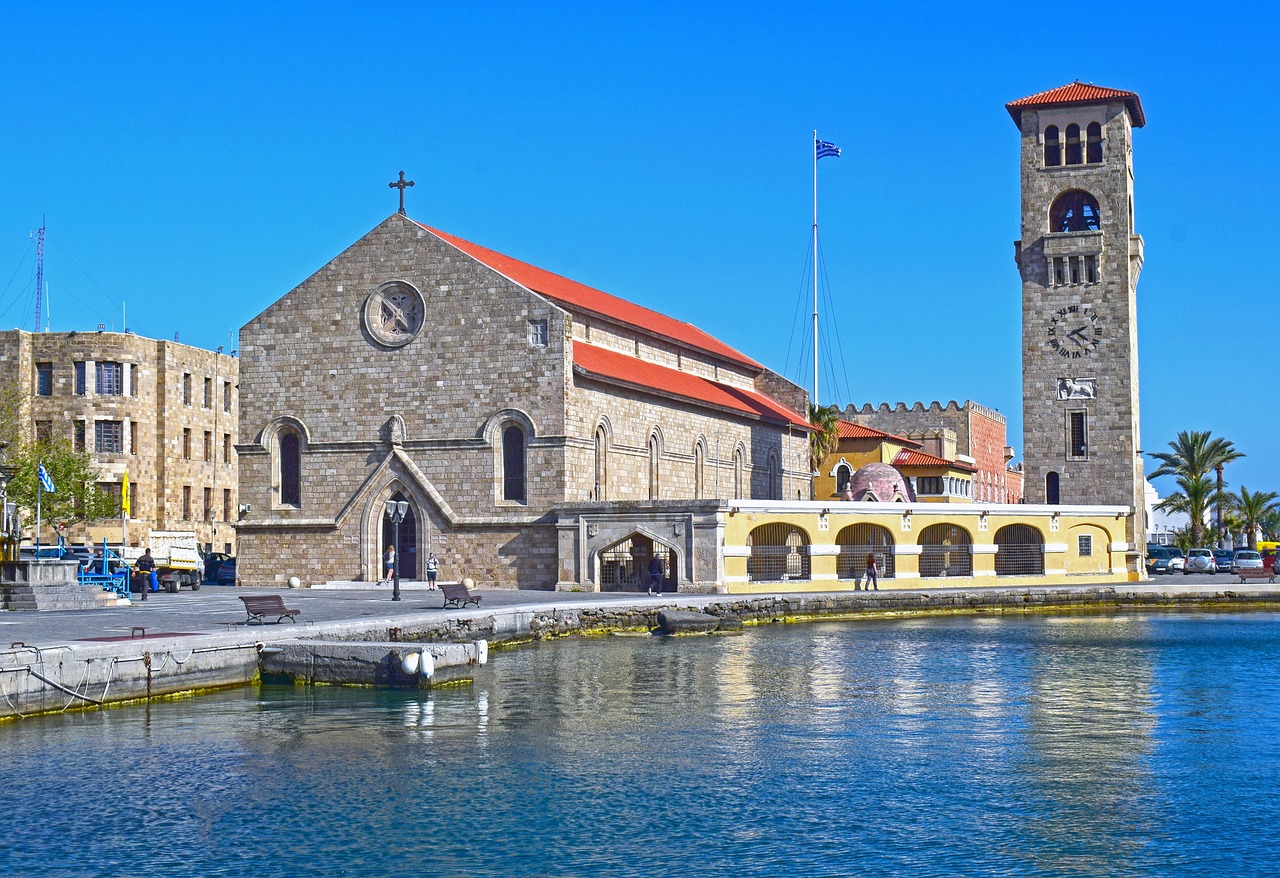
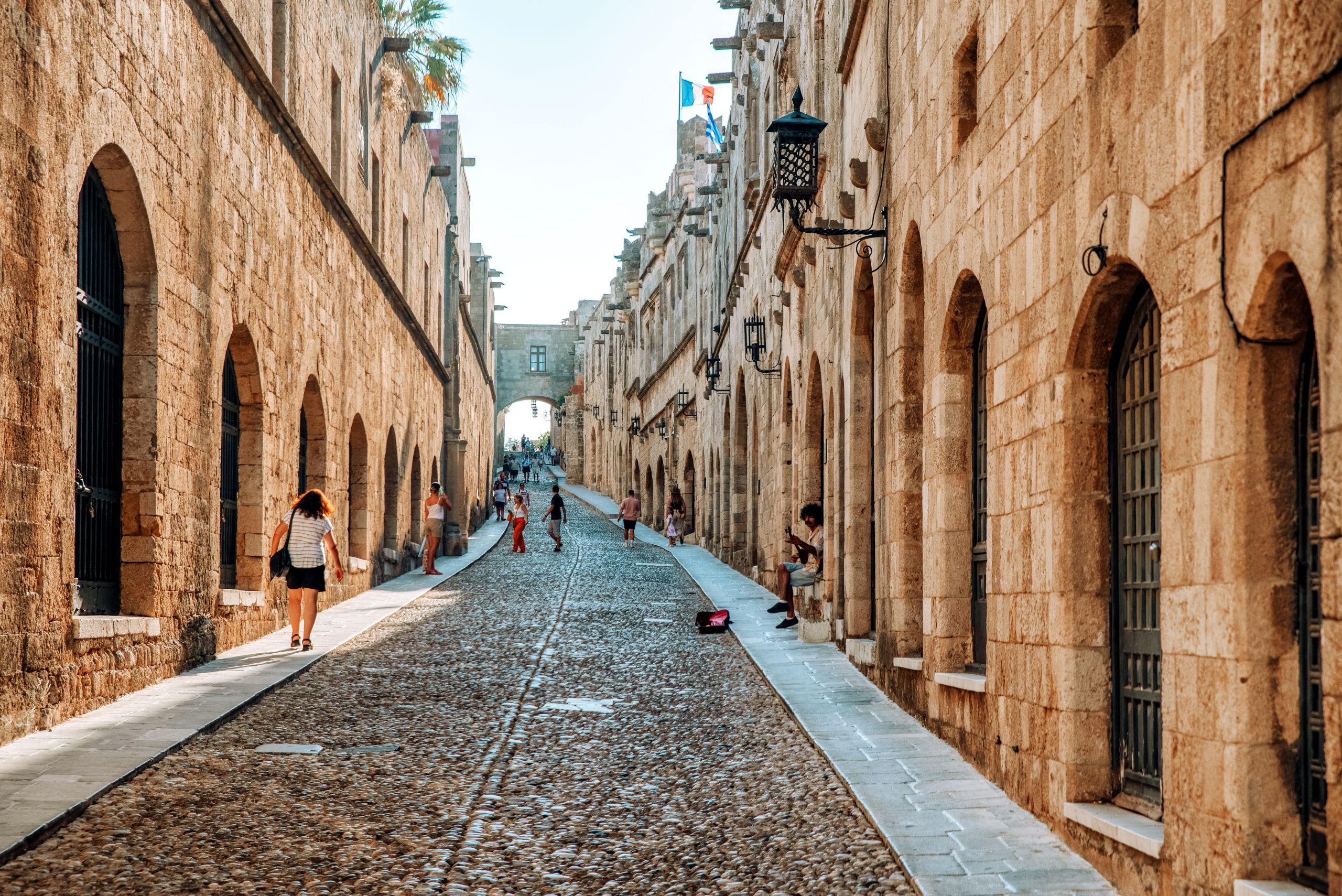
The journey opens with a panoramic drive just outside the impressive medieval walls of Rhodes Old Town, offering beautiful photo opportunities and insight into one of the best-preserved medieval cities in Europe. You then arrive at Mandraki Harbour, the historic heart of modern Rhodes, traditionally believed to be the location where the legendary Colossus once stood. A short stop nearby allows you to admire the elegant Church of the Annunciation, an important monument from the Italian era of the island.
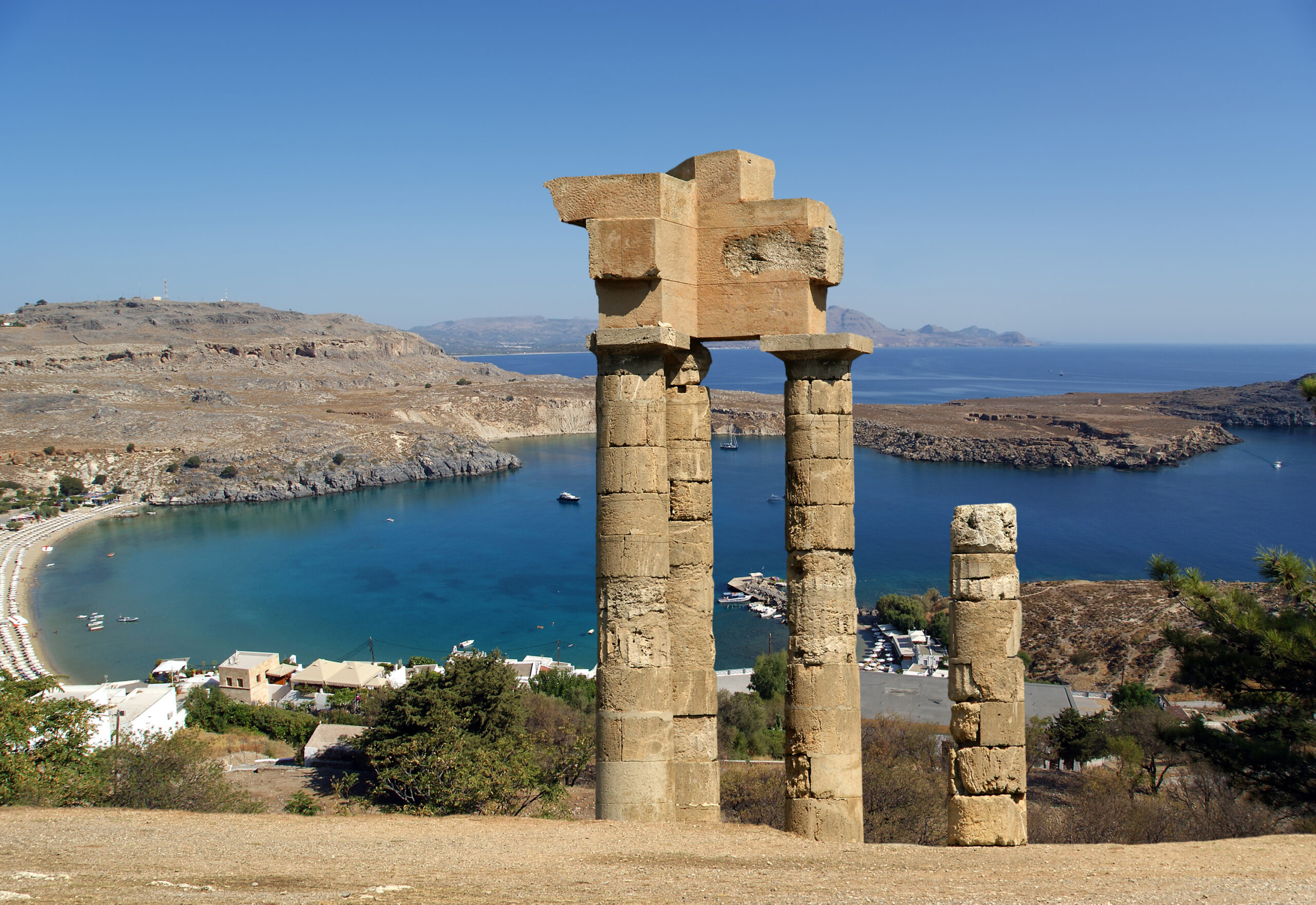
Continuing inland, the tour reaches Monte Smith Hill, one of the island’s finest viewpoints. From here, enjoy sweeping panoramas over Rhodes Town, the Aegean Sea, and the Turkish coastline, while exploring the remains of the Temple of Apollo and the restored ancient stadium that once hosted athletic competitions.
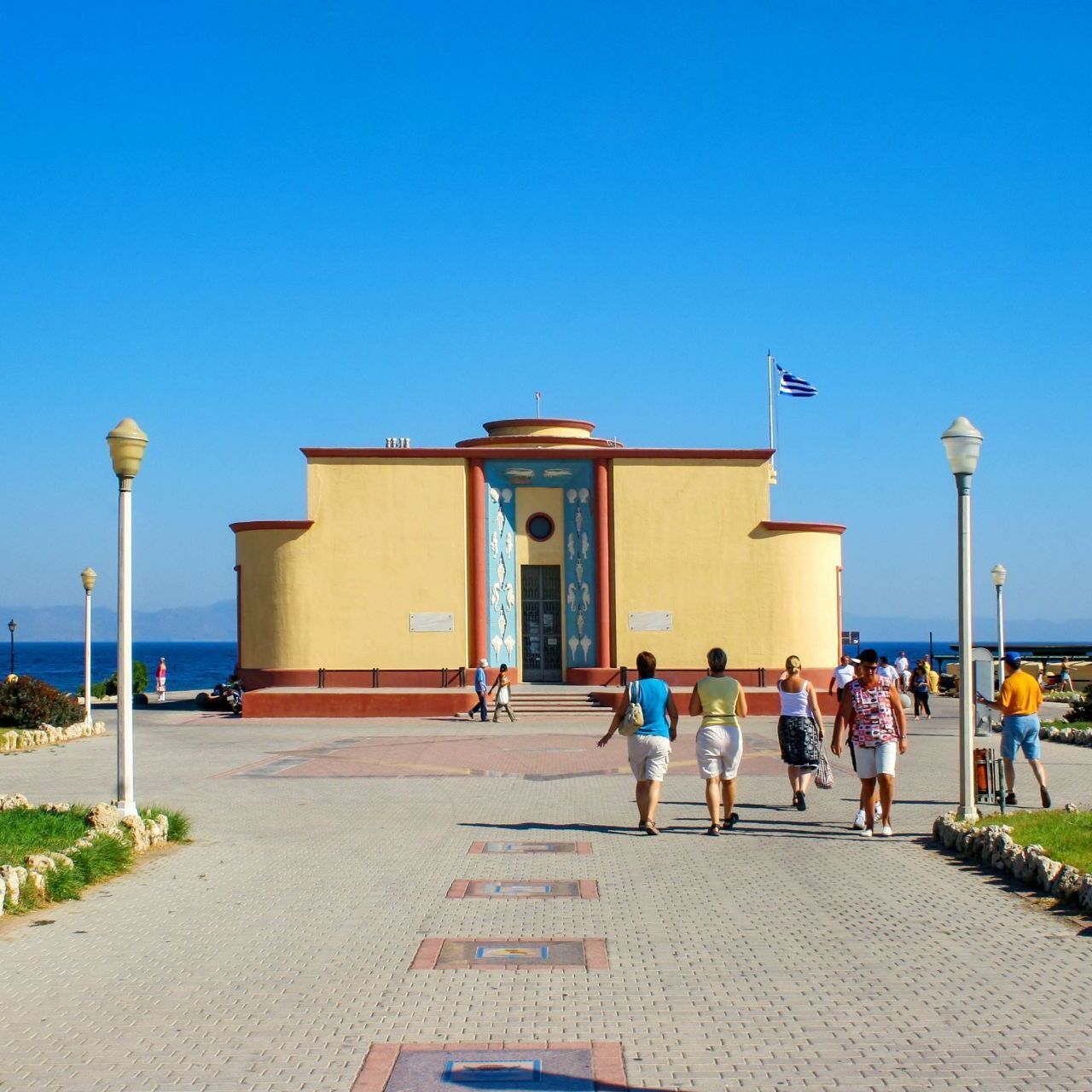
A brief stop at the Aquarium of Rhodes offers an introduction to the marine life of the Aegean Sea before the tour heads south. The drive continues through scenic countryside landscapes, passing olive groves, traditional villages, and rolling hills that showcase the island’s rural charm.
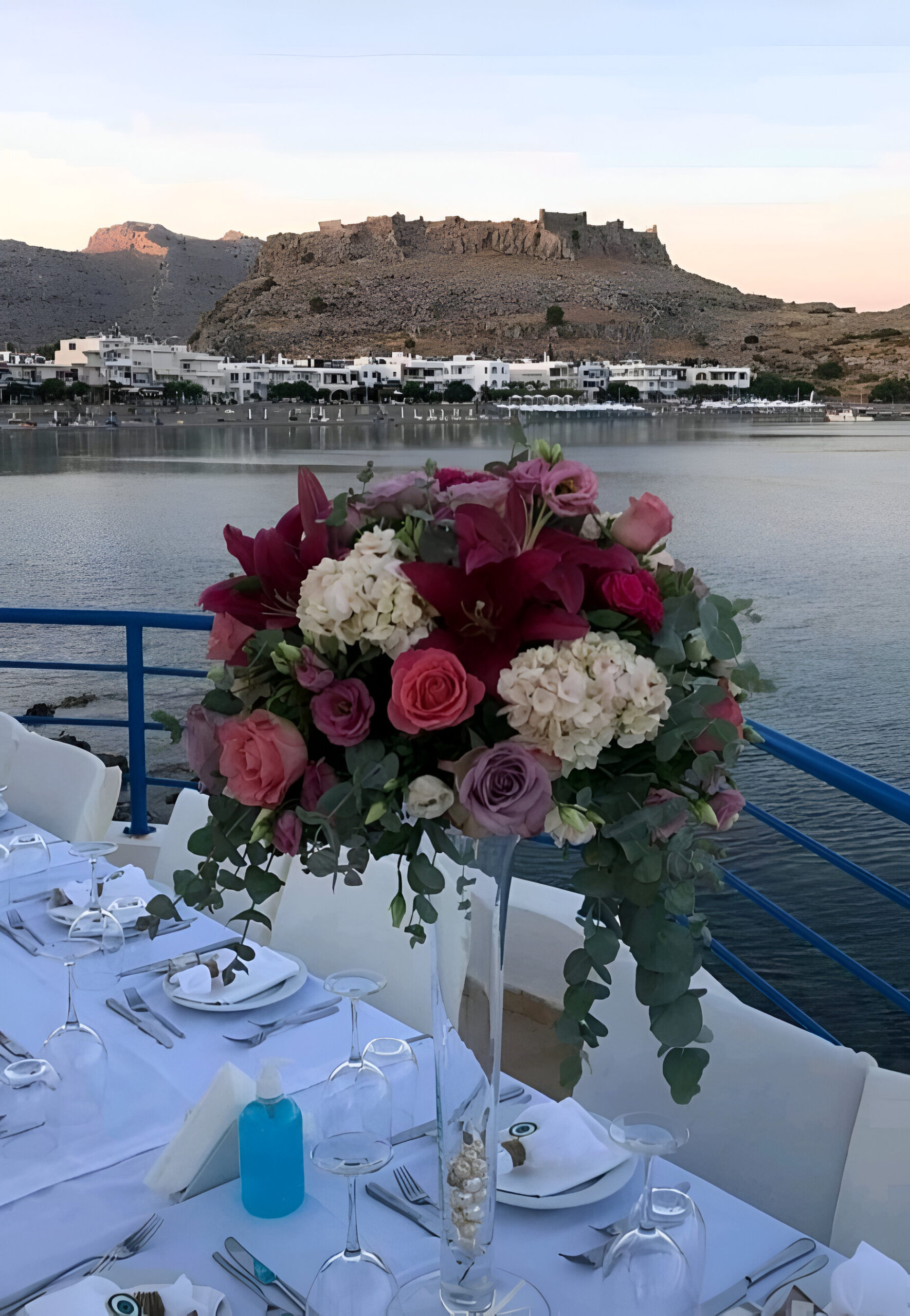
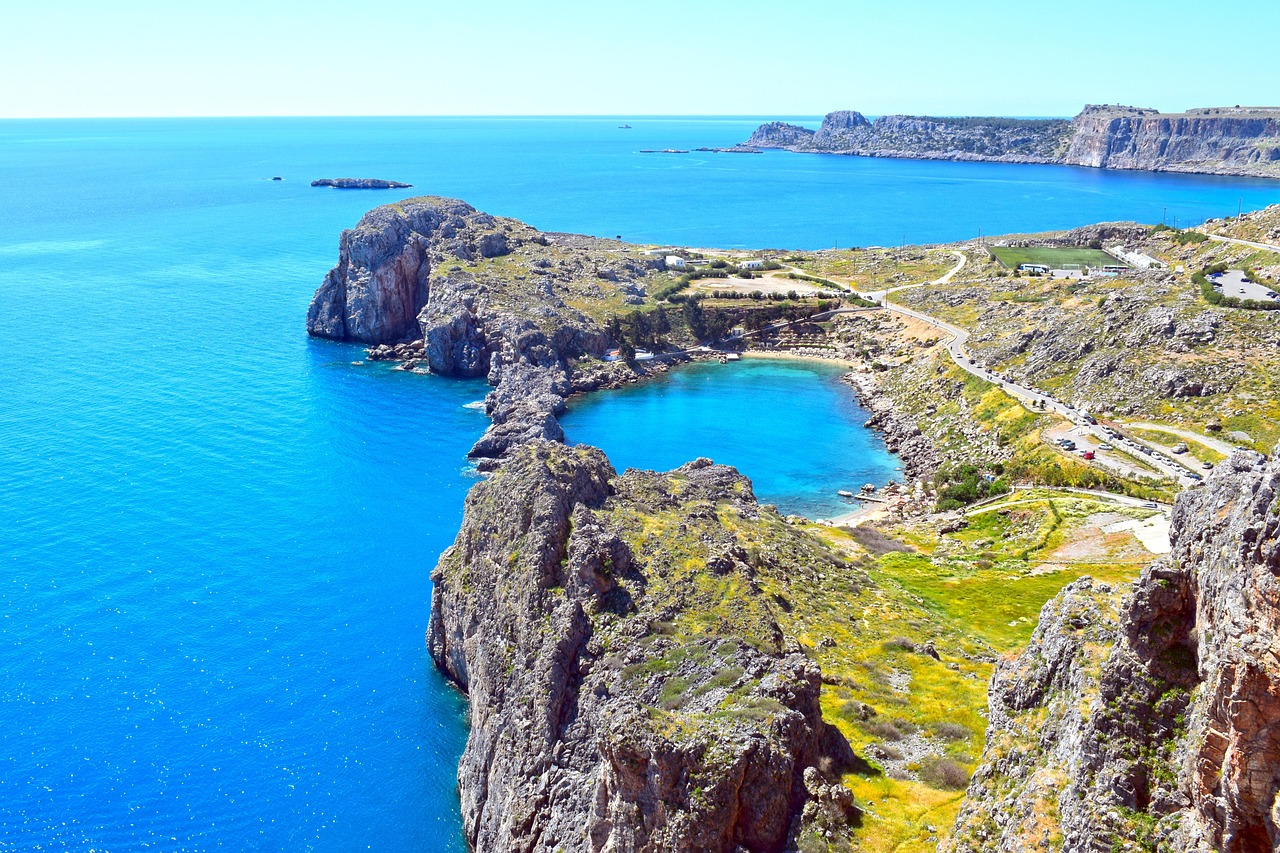
Arriving in Lindos village, one of Rhodes’ most picturesque villages, you’ll visit the stunning St. Paul’s Bay, known for its turquoise waters and dramatic surroundings. Enjoy free time to wander Lindos’ narrow whitewashed streets, browse local shops, sample traditional flavors, or optionally ride a donkey up to the Acropolis of Lindos (entrance not included) for breathtaking views.
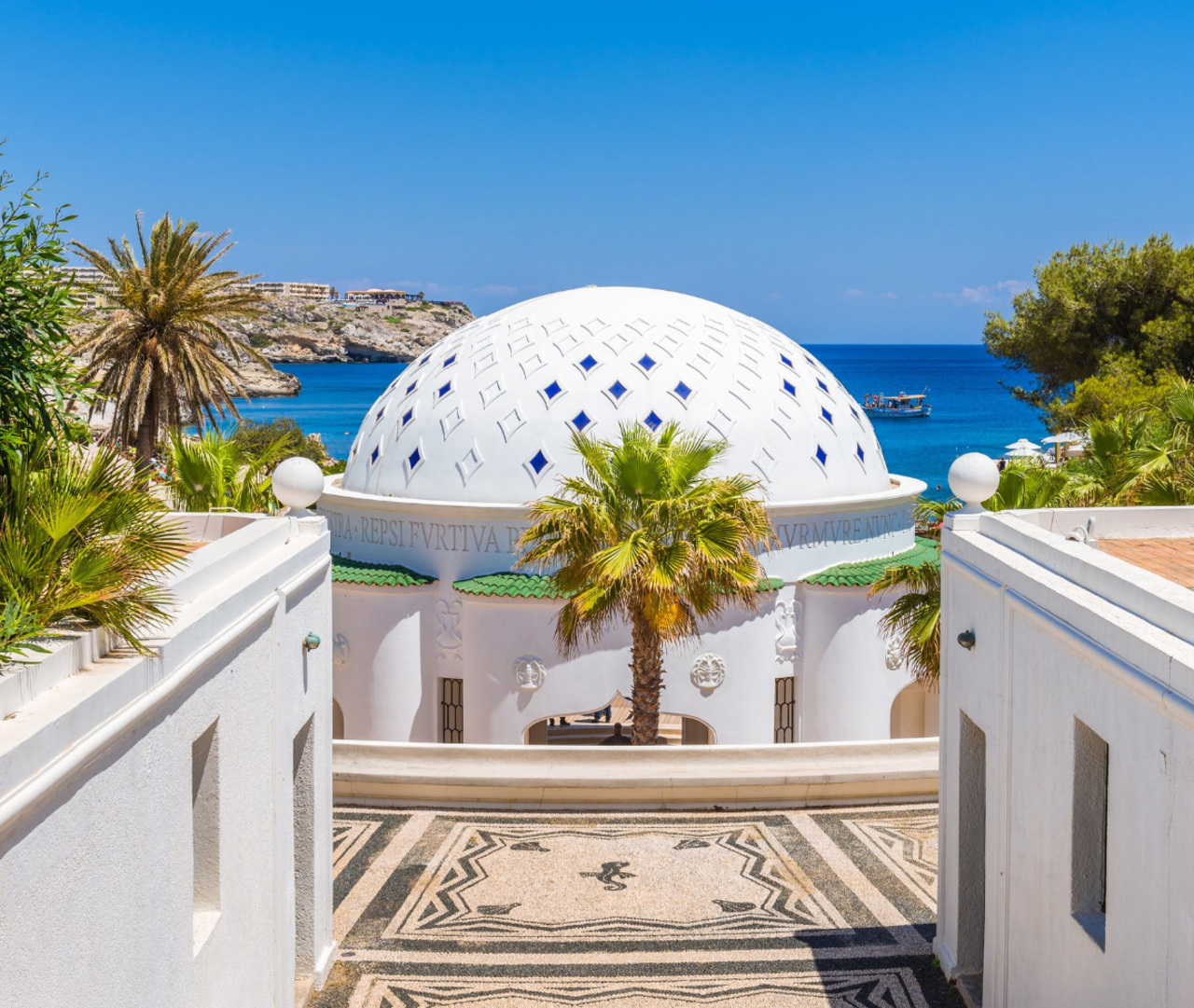
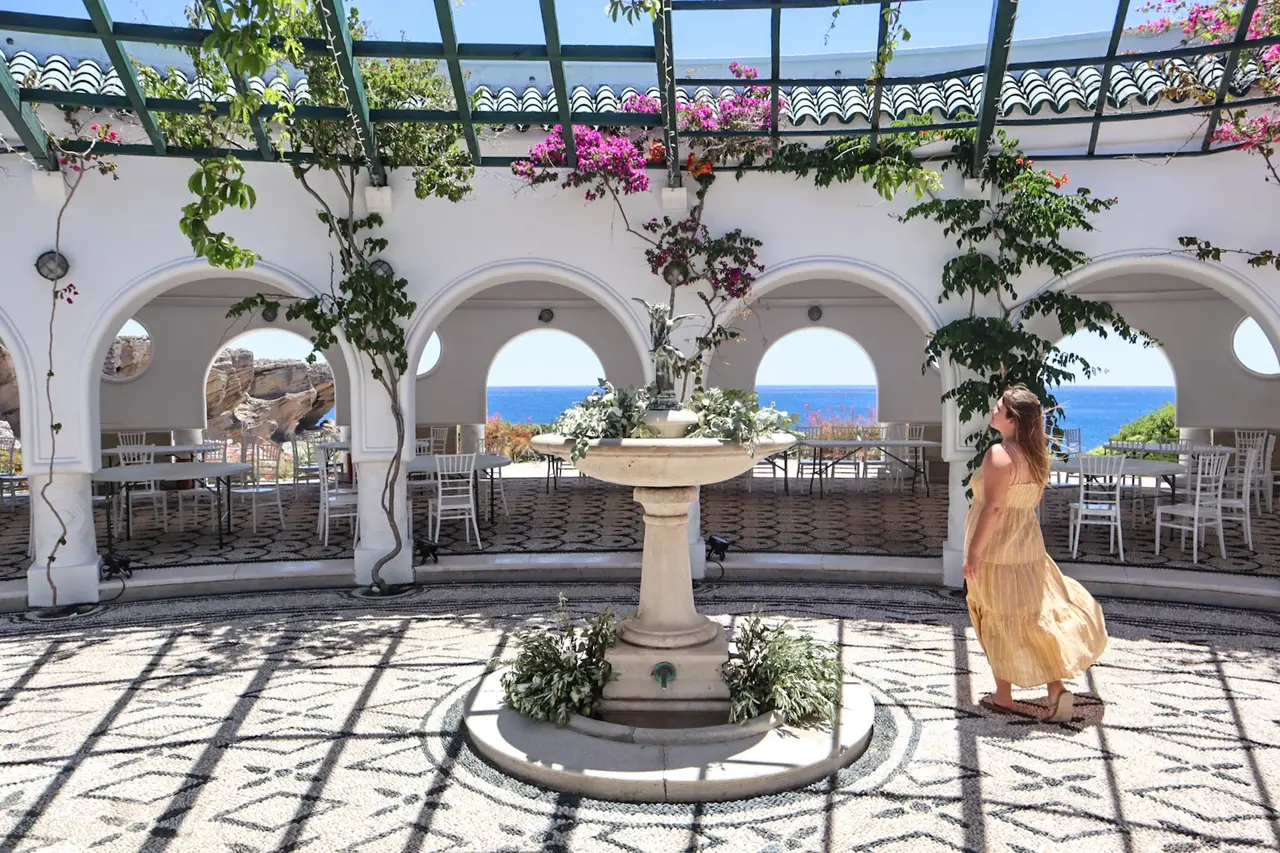
After free time and a relaxing seafront lunch overlooking the Aegean, the journey continues to Kallithea Springs. This historic spa complex is celebrated for its elegant architecture, intricate mosaics, and tranquil seaside setting, offering excellent photo opportunities and time to explore.
The day concludes with a comfortable return drive to Rhodes Town, where you may choose to further explore the Old Town at your leisure before being dropped off at your hotel or cruise ship, bringing your unforgettable day on Rhodes to a perfect close.
Inclusions - Exclusions
Private Tours are personal and flexible just for you and your party.
Inclusions:
-
Professional Drivers with Deep knowledge of history [Not licensed to accompany you in any site]
-
Hotel pickup and drop-off
-
Transport by private vehicle
- Bottled water
Exclusions:
-
Entrance Fees
-
Licensed Tour guide upon request depending on availability [Additional cost]
-
Food & Drinks
History
Rhodes Island:
Rhodes is one of Greece’s most historically layered islands, with human activity dating back to prehistoric times (c. 3000 BC). Its strategic position at the crossroads of the Aegean, Eastern Mediterranean, and Near East made it a coveted hub for trade, diplomacy, and military power for millennia.
In antiquity, Rhodes rose to prominence when the three powerful city-states of Ialyssos, Kamiros, and Lindos united in 408 BC to establish the city of Rhodes. This unification marked the beginning of a golden Hellenistic era, during which Rhodes became famous for shipbuilding, philosophy, science, and international law. The island developed one of the most advanced naval fleets of the ancient world.
Rhodes’ prosperity was symbolized by the Colossus of Rhodes, erected in the early 3rd century BC as a celebration of independence and victory. Though destroyed by an earthquake, the Colossus cemented Rhodes’ place in global history as one of the Seven Wonders of the Ancient World.
Over the centuries, Rhodes passed through Roman, Byzantine, Crusader, Ottoman, and Italian rule. Each era left lasting architectural, cultural, and religious marks, making Rhodes a rare open-air museum where antiquity, medieval Europe, and modern Greece coexist.
Rhodes Old Town:
Rhodes Old Town is among the best-preserved medieval cities in the world and is protected as a UNESCO World Heritage Site. Its present form largely dates to the rule of the Knights Hospitaller (Knights of St. John), who governed Rhodes from 1309 to 1522.
During this period, the city became a heavily fortified stronghold defending Christendom’s eastern frontier. Massive walls, bastions, gates, the Palace of the Grand Master, and the Street of the Knights reflect both military precision and medieval urban planning. After the Ottoman conquest, mosques, fountains, and baths were added, while the Italian administration later undertook extensive restorations.
Today, the Old Town is a unique historical tapestry where Crusader fortifications, Ottoman monuments, and Italian reconstructions form a living medieval city.
Mandraki Harbour:
Mandraki Harbour served as the ancient naval and commercial port of Rhodes. It was from here that the island’s powerful fleet controlled maritime trade routes throughout the eastern Mediterranean.
According to ancient sources, the Colossus of Rhodes was erected near the harbor around 280 BC, symbolizing freedom, unity, and naval supremacy. Standing approximately 33 meters high, the bronze statue of the god Helios became a global symbol of power and artistic achievement.
Although the statue collapsed during an earthquake in 226 BC, its legacy endured for centuries, and Mandraki remains synonymous with Rhodes’ ancient maritime dominance.
Church of the Annunciation:
The Church of the Annunciation reflects the Italian period of Rhodes (1912–1943), when the island was part of the Italian Dodecanese. Built originally as a Catholic church dedicated to Saint John, it showcases Italian architectural aesthetics blended with local influences.
After Rhodes was unified with Greece in 1948, the church became Orthodox. It stands today as a reminder of Rhodes’ complex modern history and the lasting imprint of 20th-century European rule on the island.
Monte Smith Hill (Ancient Acropolis of Rhodes):
Monte Smith Hill is the site of the ancient Acropolis of Rhodes, dating from the Classical and Hellenistic periods. Unlike fortified acropolises, this was an open religious and cultural center, dedicated to education, athletics, and worship rather than defense.
The location offers sweeping views over the city and the sea, chosen deliberately to reflect harmony between nature, religion, and civic life. The hill illustrates Rhodes’ identity as a center of learning and culture, not merely military power.
Temple of Apollo:
The Temple of Apollo formed the heart of the ancient acropolis. Apollo, god of light, music, prophecy, and education, symbolized intellectual clarity and artistic refinement—values central to Rhodian society.
Nearby structures, including the stadium and theater, indicate that religious worship, athletic competition, and public gatherings were closely linked in ancient Greek life on Rhodes.
Lindos Village:
Lindos is one of the oldest and most important settlements on Rhodes, flourishing as a major naval and trading center in antiquity. Its powerful acropolis dominated sea routes, while its natural harbor supported commerce and diplomacy.
Over the centuries, Lindos adapted to Byzantine, Crusader, and Ottoman rule while retaining its traditional layout. The whitewashed houses and narrow streets seen today were designed to protect inhabitants from heat and pirate attacks, preserving a lifestyle shaped by centuries of history.
St. Paul’s Bay:
According to Christian tradition, Saint Paul the Apostle landed at St. Paul’s Bay around AD 57 during his missionary journeys. The bay provided a sheltered anchorage and has since become an important religious reference point on the island.
Today, St. Paul’s Bay represents the meeting point of natural beauty, early Christianity, and history, remaining one of the most serene and symbolic locations in Rhodes.
Kallithea Springs:
Kallithea Springs were officially developed during the Italian era and inaugurated in 1929 as a luxury thermal spa. The complex combined health, leisure, and architectural elegance, blending classical symmetry with Moorish and Art Deco elements.
Although the therapeutic use of the waters declined in the late 20th century, Kallithea Springs remain an architectural landmark and a symbol of Rhodes’ transition into the modern age.
Cancellation Policy

All cancellations must be confirmed by Olive Sea Travel.
Regarding the Day Tours:
Cancellations up to 15 days before your service date are 100% refundable.
Cancellation Policy:
- Licensed Tour Guides and Hotels are external co-operators & they have their own cancellation policy.
- Apart from the above cancellation limits, NO refunds will be made. If though, you fail to make your appointment for reasons that are out of your hands, that would be, in connection with the operation of your airline or cruise ship or strikes, extreme weather conditions or mechanical failure, you will be refunded 100% of the paid amount.
- If your cancellation date is over TWO (2) months away from your reservation date, It has been known for third-party providers such as credit card companies, PayPal, etc. to charge a levy fee usually somewhere between 2-4%.
- Olive Sea Travel reserves the right to cancel your booking at any time, when reasons beyond our control arise, such as strikes, prevailing weather conditions, mechanical failures, etc. occur. In this unfortunate case, you shall be immediately notified via the email address you used when making your reservation and your payment WILL be refunded 100%.

Athens Full Day Private Tour