Rhodes Island:
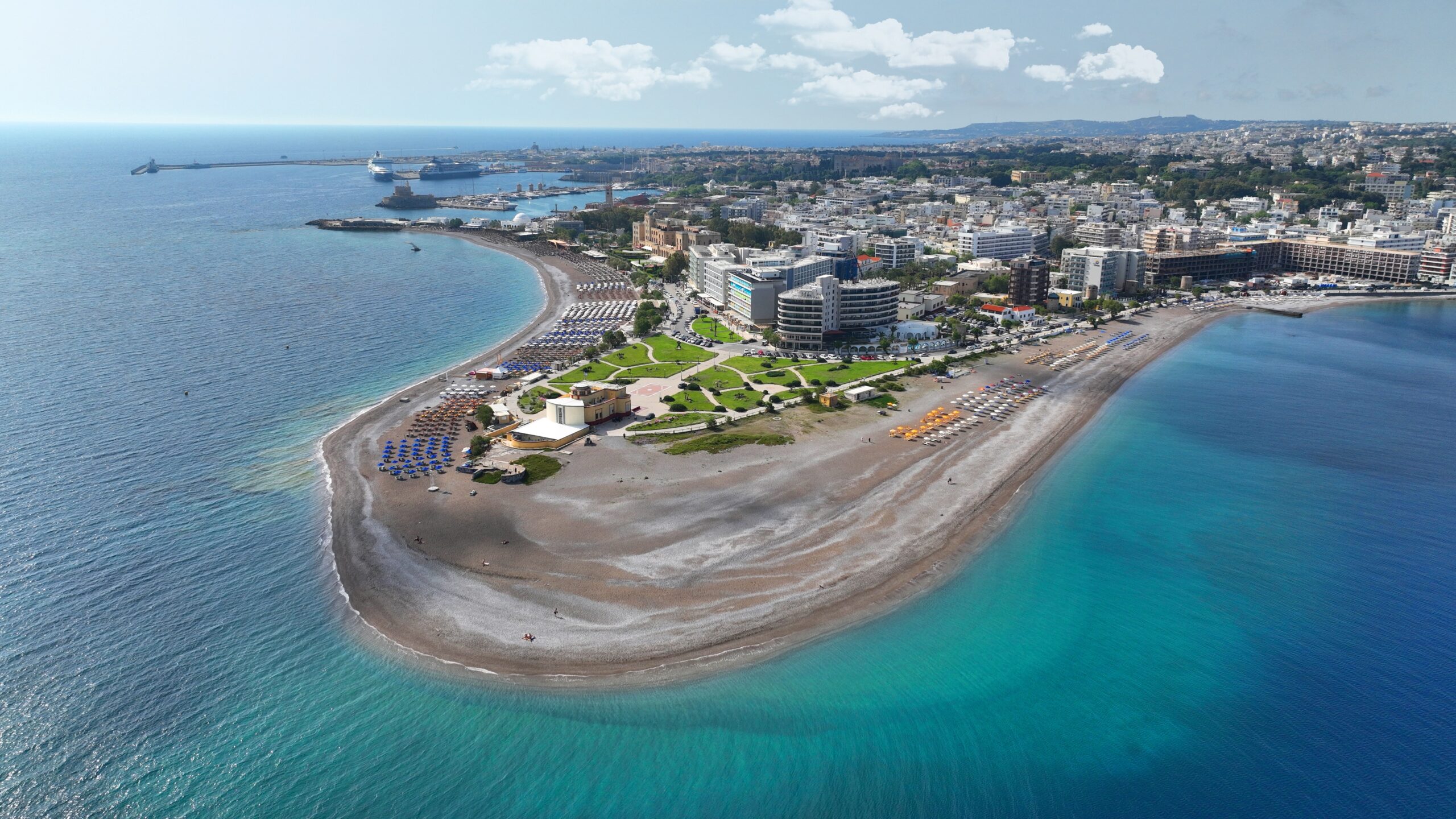
Rhodes is one of Greece’s most historically significant islands, with evidence of human presence dating back more than 4,000 years. Its strategic position at the crossroads of the Aegean Sea, Asia Minor, and the Near East made it a powerful center of trade, culture, and maritime influence throughout antiquity.
In 408 BC, the three ancient city-states of Lindos, Ialyssos, and Kamiros united to found the city of Rhodes, marking the beginning of a prosperous era. During the Hellenistic period, Rhodes became renowned for shipbuilding, navigation laws, art, and philosophy. Its naval power helped maintain stability across Mediterranean trade routes.
Rhodes gained worldwide fame with the construction of the Colossus of Rhodes, one of the Seven Wonders of the Ancient World, symbolizing independence and strength. Although destroyed by an earthquake, the Colossus cemented Rhodes’ legacy as a leading ancient power.
Over the centuries, Rhodes passed under Roman and Byzantine control before entering a defining medieval period under the Knights of St. John (14th–16th centuries), followed by Ottoman and Italian rule. Each era left visible layers of architecture, religion, and culture, making Rhodes a rare island where ancient, medieval, and modern history coexist seamlessly.
Rhodes East Coast:
The east coast of Rhodes has historically been vital for settlement, trade, and defense. Sheltered from strong western winds, it offered natural harbors, fertile land, and safe anchorage. Many ancient towns, ports, and later villages developed along this coastline, shaping Rhodes’ economic and cultural life across centuries.
Traveling this route today follows paths once used by merchants, soldiers, pilgrims, and sailors moving between Lindos and the northern parts of the island.
Lindos Village:
Lindos is one of the oldest and most important settlements on Rhodes. In antiquity, it functioned as a powerful and independent city-state with a strong navy and extensive trade connections across the Mediterranean.
Due to its natural harbor and elevated acropolis, Lindos controlled sea routes and flourished economically. Even after unification under the city of Rhodes, Lindos retained religious and cultural importance. Over time, Byzantine, Crusader, and Ottoman influences shaped the village’s character while preserving its traditional layout.
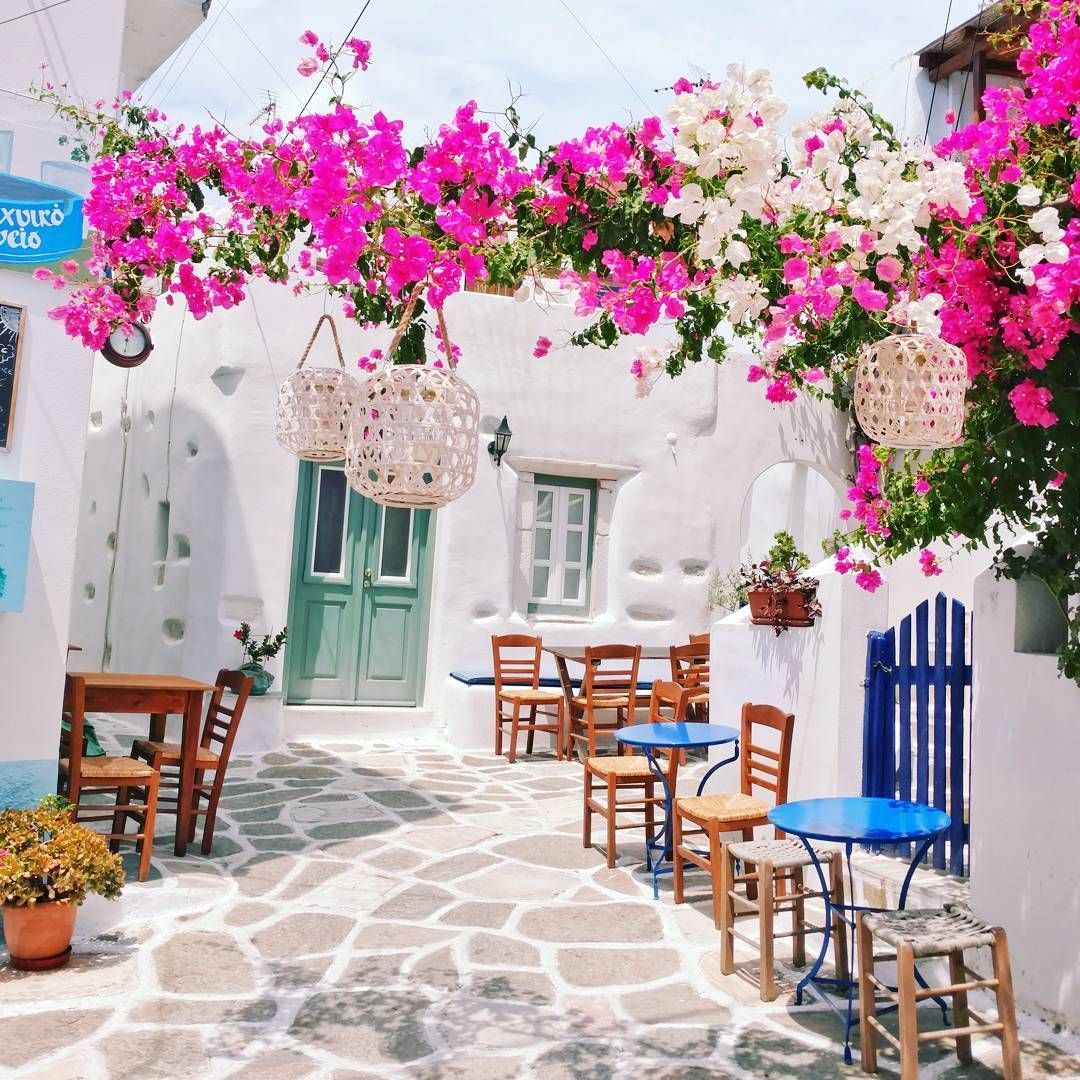
The whitewashed houses and narrow streets seen today developed during medieval and Ottoman periods, designed to protect inhabitants from heat, pirates, and invasion while fostering a close-knit community.
Acropolis of Lindos:
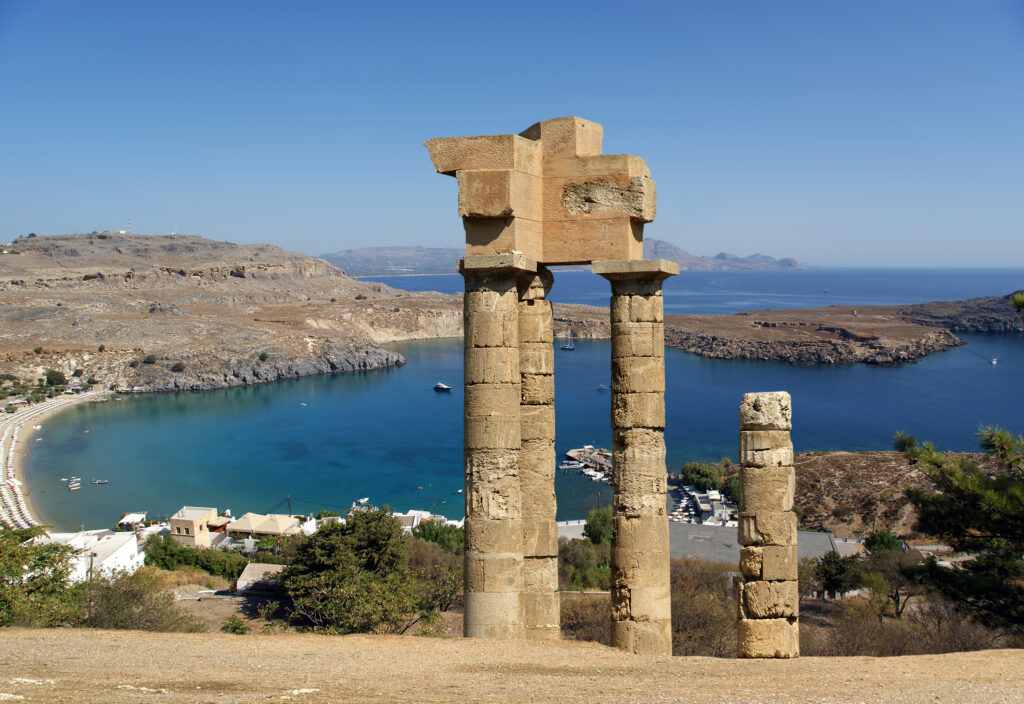
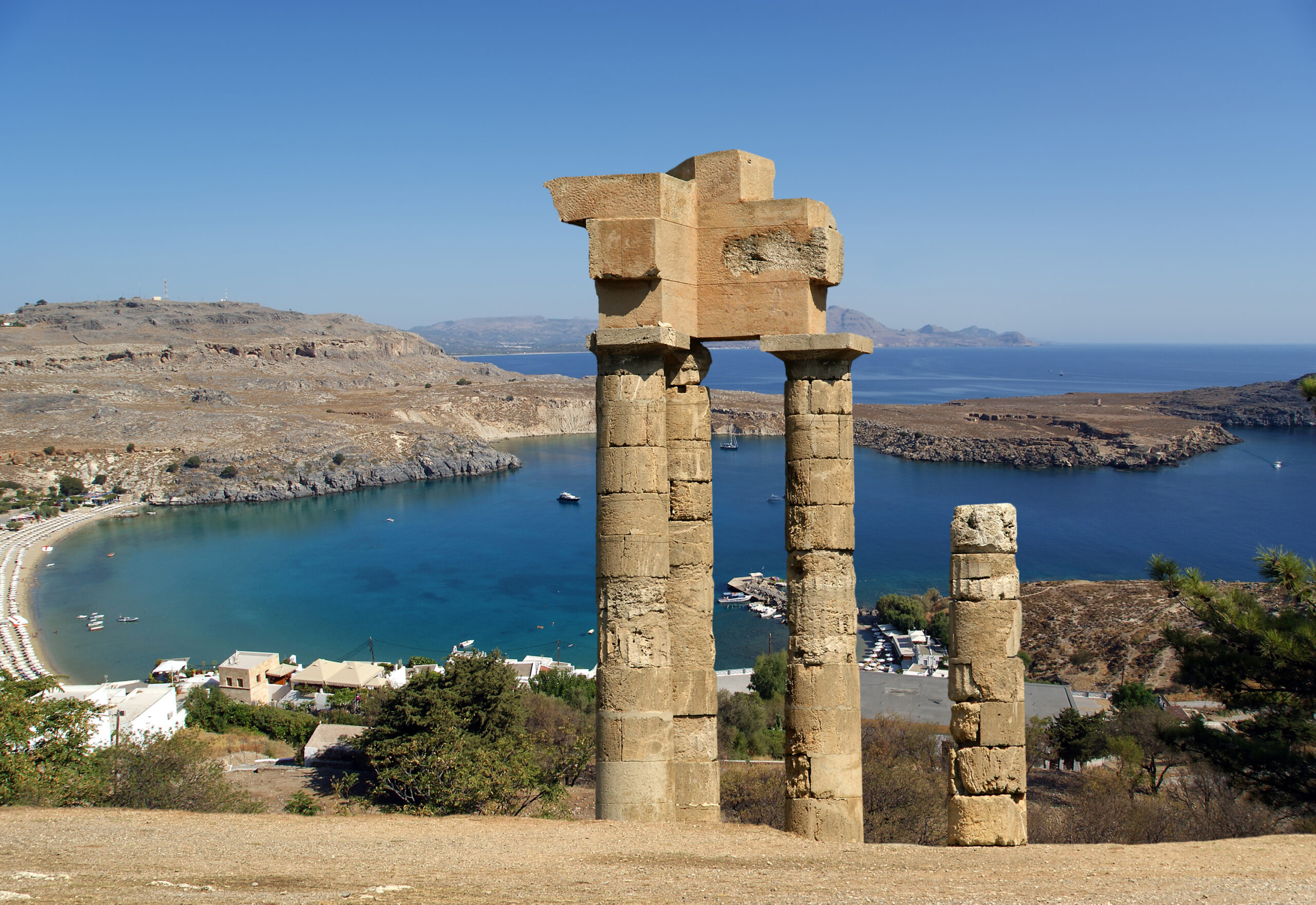
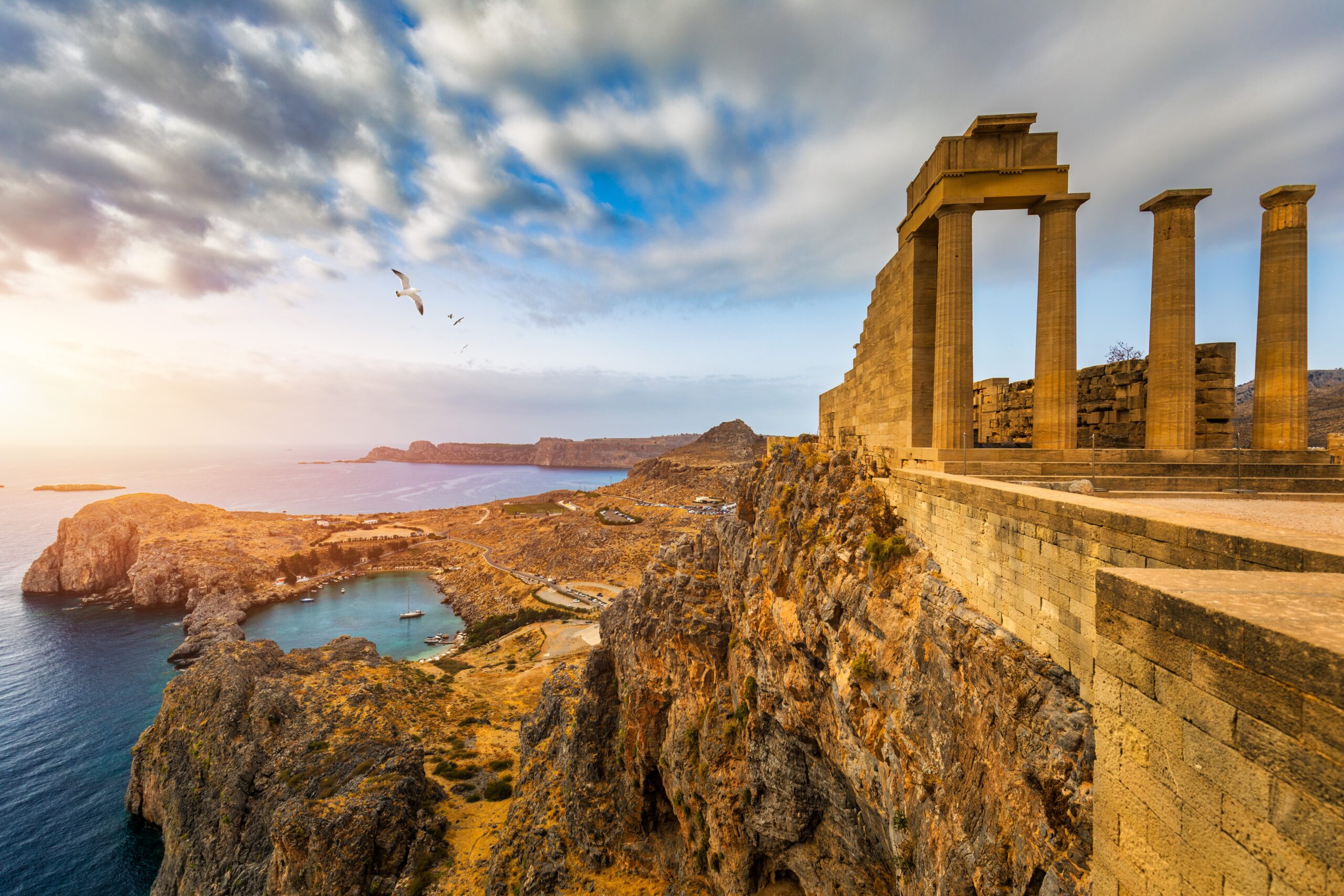
The Acropolis of Lindos dominates the landscape, rising dramatically above the village and sea. It has been continuously used since antiquity, making it one of the most significant archaeological sites on Rhodes.
Unlike defensive fortresses, this acropolis served primarily as a religious and ceremonial center. Its commanding position allowed control of sea routes and symbolized divine protection over the city. Over centuries, ancient Greek structures were later reinforced by Byzantine and medieval fortifications, reflecting Lindos’ ongoing strategic value.
Temple of Athena Lindia:
At the heart of the acropolis stands the Temple of Athena Lindia, dedicated to the patron goddess of Lindos. Athena was revered here as a protector of sailors, warriors, and wisdom—key values for a maritime city.
The sanctuary became famous across the ancient Greek world, attracting pilgrims and offerings from far beyond Rhodes. Inscriptions discovered on site provide rare historical records of ancient navigation, trade, and religious life.
St. Paul’s Bay:
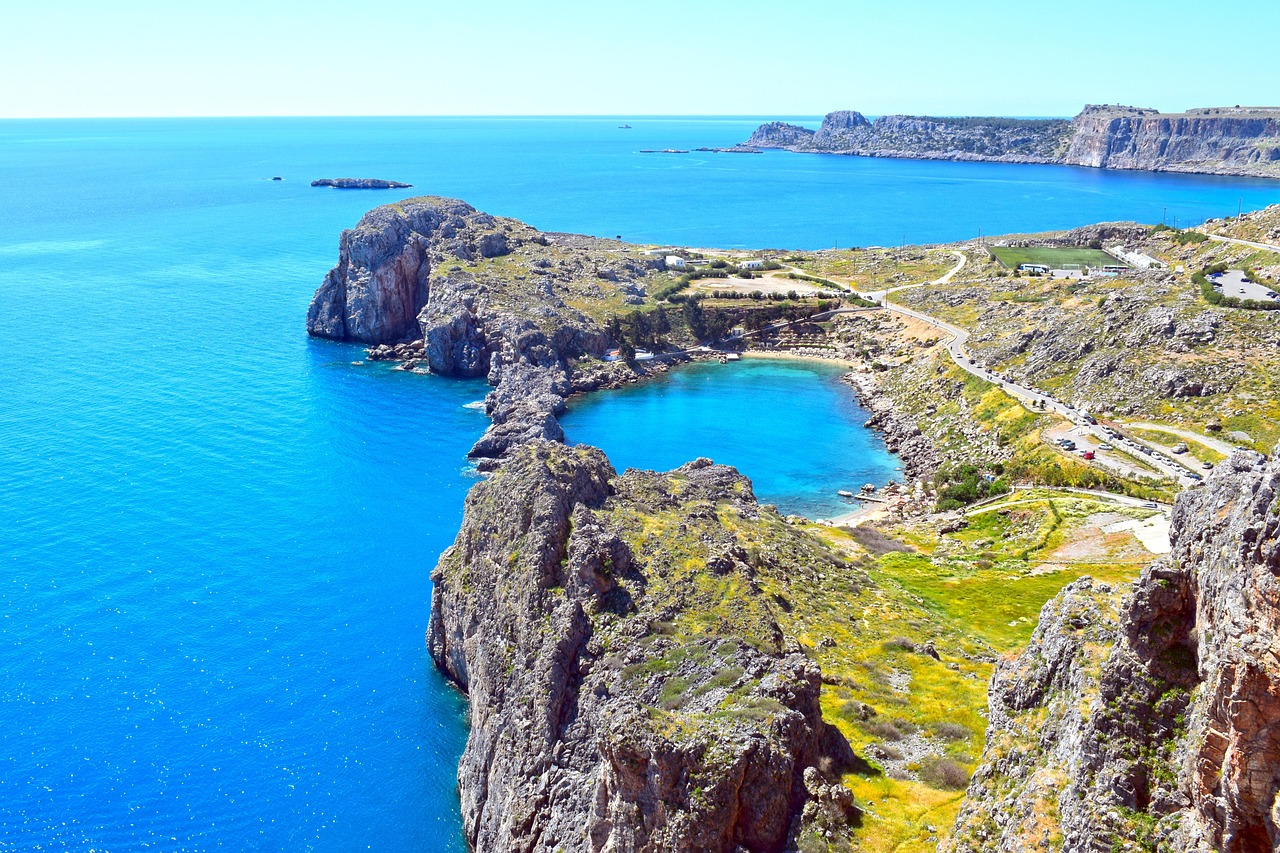
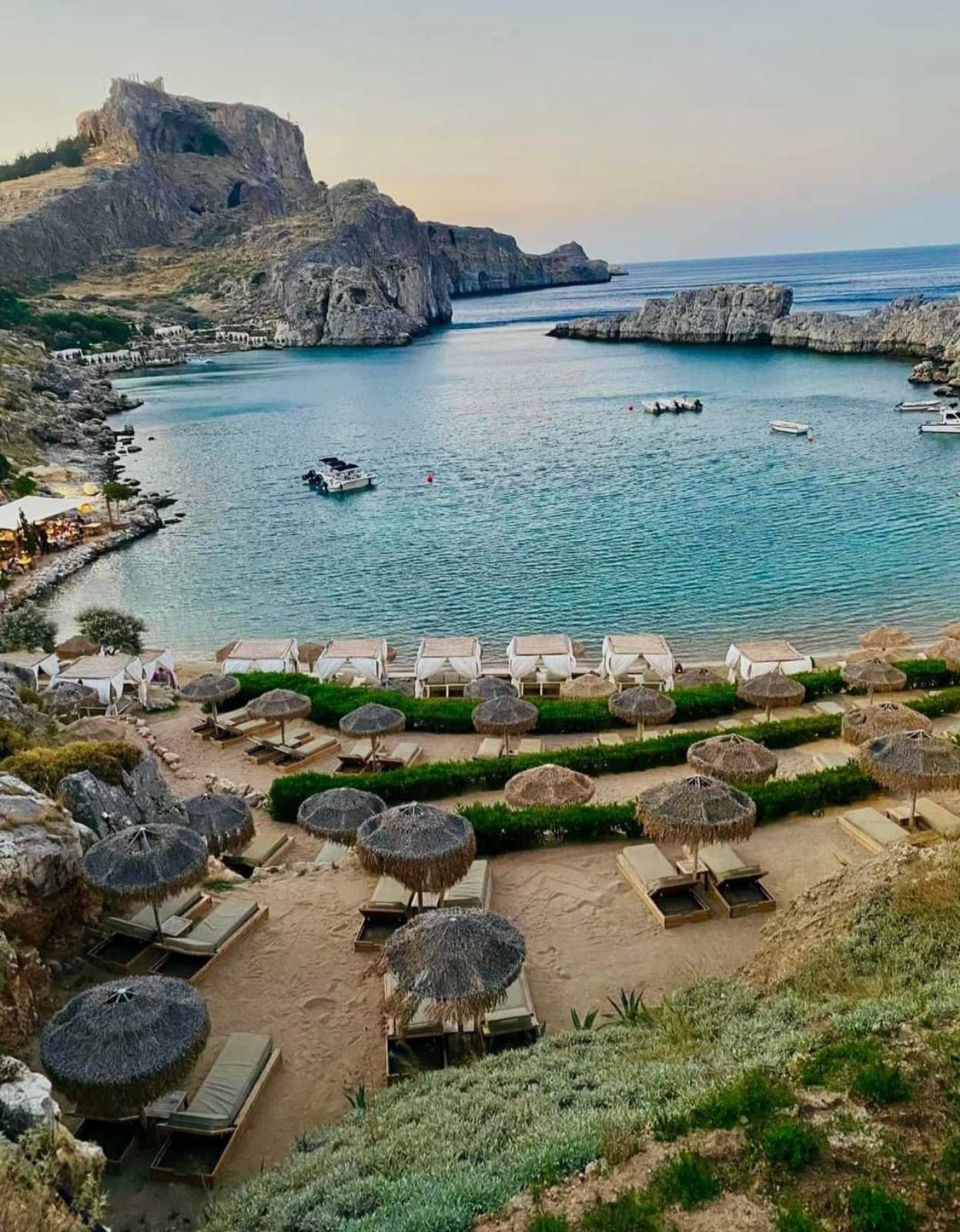
St. Paul’s Bay holds both natural and spiritual significance. According to Christian tradition, Saint Paul the Apostle is believed to have landed here around AD 57 during his missionary journeys to the eastern Mediterranean.
The bay’s sheltered shape made it an ideal anchorage in antiquity. Today, it symbolizes the early spread of Christianity while remaining one of the most beautiful and serene locations on Rhodes.